Musturud is actually part of greater Cairo, on the agricultural road from Cairo to Bilbays. Here we visit the Church of the Holy Virgin at Musturud in which the Holy Family found shelter after a long day of traveling. We will also see the cave where they rested and the well that Jesus created, which the Holy Family used for drinking, washing and bathing, that is why it is called al–Mahamma (bathing place).
The recorded history of this church goes back to 1185 A.D. when Pope Marcos III built a great church on this place and dedicated it to the Holy Virgin. Coptic Christians, however, believe older churches stood on this spot. The church has recently been restored and has a beautiful collection of icons. Musturud has become an important pilgrimage location for Coptic pilgrims yearly, attracting hundreds of thousands of people.

Photo: Paul Perry, a mosque’s minaret seen through the domes of the Church of the Holy Virgin at Musturud. It is common to have a mosque close to a church.

Photo: Paul Perry, Inside the cave where the Holy Family stayed and found shelter at the church of the Holy Virgin

Photo: Paul Perry, a church worker standing beside the well at the Church of the Holy Virgin at Musturud. This well was created by Jesus to provide the Holy Family with water during their stay at Musturud. At the background we can see the steps leading down to the cave where the Holy Family rested and found shelter.

Photo: Paul Perry, the gate leading to the Church of the Holy Virgin

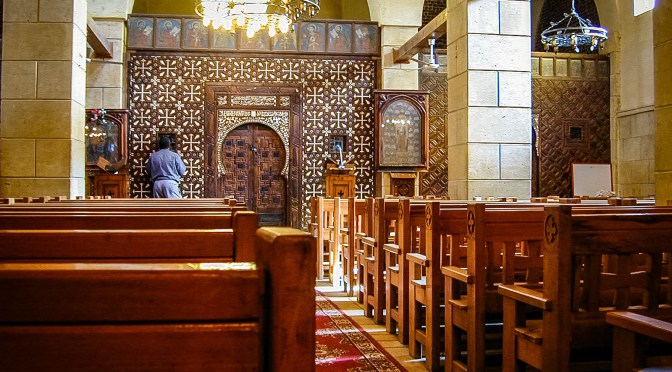
Photo: Norbert Schiller, the Holy Virgin Church at Musturud. After a long day of traveling, the Holy Family was in need of shelter and water. They found a cave in Musturud where they rested and at that spot Jesus created a well, which the Holy Family used for drinking, washing and bathing. This well is now located inside this church.

 Holy Family in Egypt